
Telling local stories and uncovering hidden gems
Thelma Bishop-Young
I was born and bred in Southampton. I learnt to swim at six years old, at Eastleigh Leisure Centre, mainly because my medical consultant said it would be good for my joints, muscles and bones.
I joined the City of Southampton Swimming Club in 1980 and went on to compete in hundreds of events. Selected for the Great Britain Swim Squad in 1986, I competed in World, European and Paralympic games, winning 15 international medals including four Paralympic (two gold, two bronze).
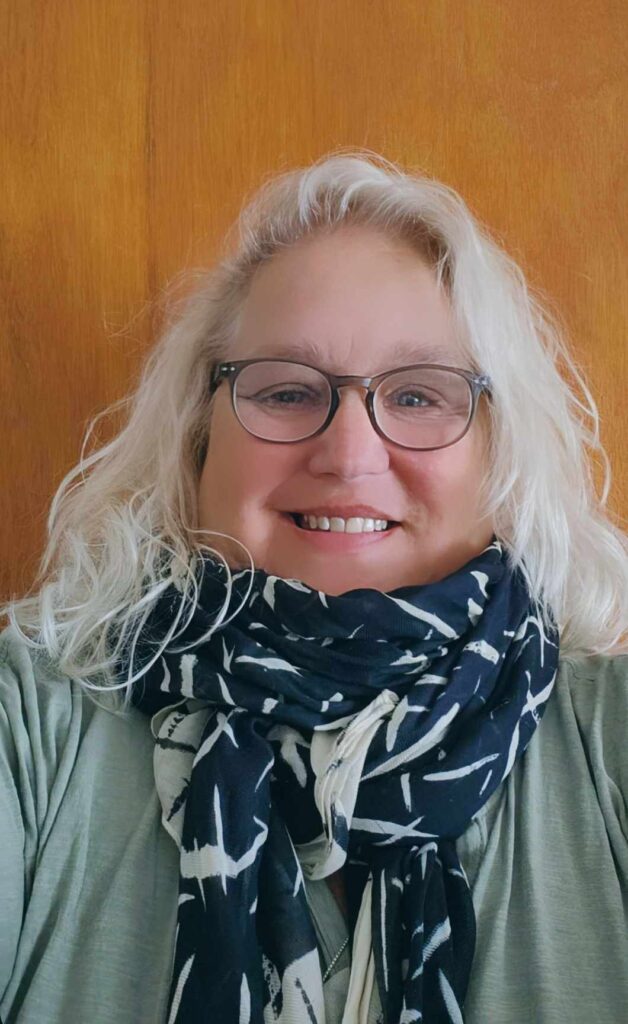
I have been a volunteer with the Southampton City Scouts for almost 30 years, holding numerous roles, and I now work with the adult volunteers to ensure they have a well-rounded experience. I had the honour of receiving an Award of Merit in 2008 and The Award of the Silver Acorn in 2018 and am the current District President.
I am Chair of the Southampton Branch of BackCare. We provide private hydrotherapy at Southampton General Hospital for people with back issues. I am also a member of the Saints Disabled Supporters’ Association.
As a Local Connector for Southampton Forward and Local Ambassador for the City of Culture 2025, I have been involved in several of Southampton Forward’s projects, including City Reflections 1, Pub Cultures and Tapestry Festival. I have also advised on access across the city (as I am a wheelchair user).
I was delighted to be asked to be a community creator for City Reflections: Illuminating Southampton’s Stories, which will take place across four evenings in February 2026. The event will transform six of the most iconic heritage buildings in Southampton’s Old Town and city centre with large-scale projections, immersive soundscapes and storytelling inspired by the city’s Art, Maritime and Archaeology collections.
I am nosy, so the idea of getting an opportunity to delve into the archives was too much of an opportunity to turn down. My topic is culture, and the projection location is The Bargate. It was an honour to be allocated arguably the most iconic building in Southampton, so I felt a lot of pressure to do it justice.
Culture is a massive topic which means something different to everyone, so we agreed to stick with volunteering as the main focus, choosing to highlight as many of the events and organisations as possible with volunteering at their heart.
All the community curators had the opportunity to visit the archive stores across the city – maritime, art gallery, archaeology, city stores and the SeaCity museum. My work was mainly with Jo Smith in the city archives. The extent of her knowledge is second to none. With her help I uncovered so many interesting artefacts and records, spending many hours looking at photos, paperwork and listening to oral histories.
The one thing I wasn’t expecting was the lack of archive material from the last 30 to 40 years, which meant we couldn’t find any information on some of the things that younger people in the community suggested. I hope this project inspires organisations to consider donating or loaning items to the archives, to ensure the changing histories of Southampton are recorded for future generations.
Many of the people I spoke to during my research enjoyed reminiscing about festivals they had been to in the past – The Southampton Show and Southampton Musical Competition to name a couple. I was surprised that most had limited knowledge of how Southampton’s culture has changed over the last 70 years due to migration, however.
The item that really touched me was the Basque Scrapbook, documenting the experiences of Basque children evacuated to the UK during the Spanish Civil War in the 1930s. It was fascinating to read about how the city came together to offer them accommodation, food, clothes, toys and entertainment. It just shows how kind, generous and selfless the people of Southampton have always been.
I’m really excited about what we’re creating for visitors to enjoy next February. I’m hoping families will visit together, with the older generations saying, “I remember that” and the younger ones having pride in the city they live in and seeing how far we’ve come. The entire event will be accessible. All the venues and routes have been checked for access.
It’s a trail that has no end and no beginning, so people can wander around the old town and marvel at the number of heritage buildings this city has to offer. The video projections will tell local stories and hopefully uncover some hidden gems that offer unique insights into Southampton’s history.

Share this post