

Work made during the Abstract Painting workshop on Saturday, 11th October 2025
Fifteen people aged from 9 to in their 50s gathered at October Books in Southampton for an abstract painting workshop inspired by Jane Austen. Participants were encouraged to be experimental – a little like Jane was in her writing technique, especially the more unruly and innovative approaches to writing revealed by her manuscripts.
They squeezed acrylic paint directly onto canvases and used palette knives as well as brushes to explore the potential of texture and colour. This was direct expression that sometimes had meaning and sometimes was its own end.
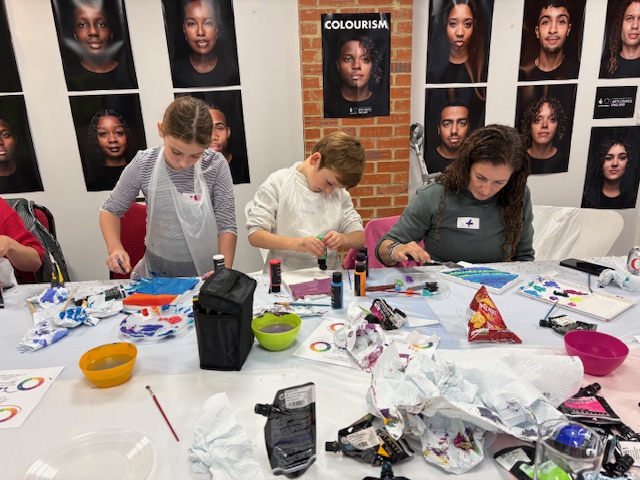
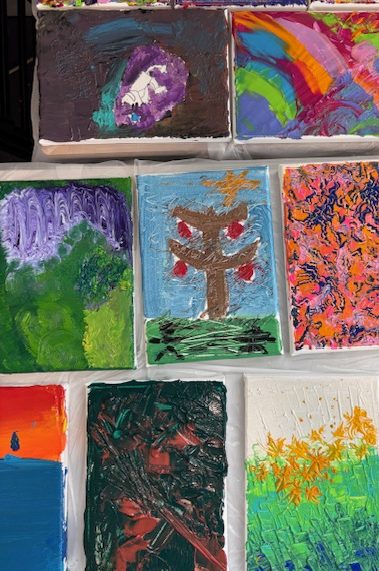
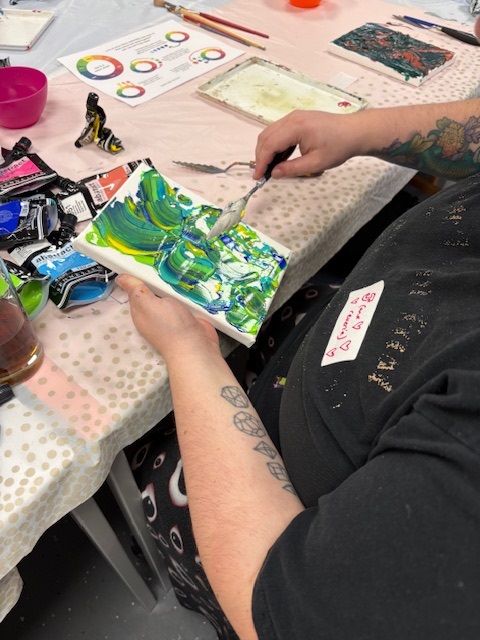

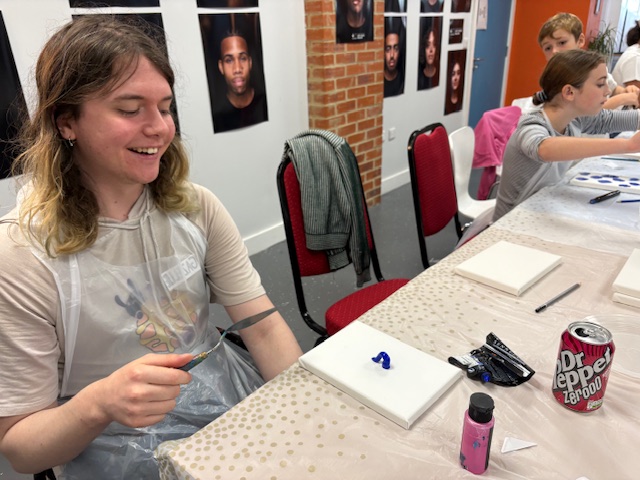
‘I wasn’t sure what to expect today but it was such a friendly, welcoming atmosphere! The drinks and snacks were lovely. I really enjoyed all the colours and tools like palette knives to play with – I got to work with texture which I haven’t really been able to do before.
I would love any more stuff we could try out – the textures inspired me to do some more mixed media. I’d definitely like to come again 😊.’
[this person didn’t write their name, so not sure which works it refers to]
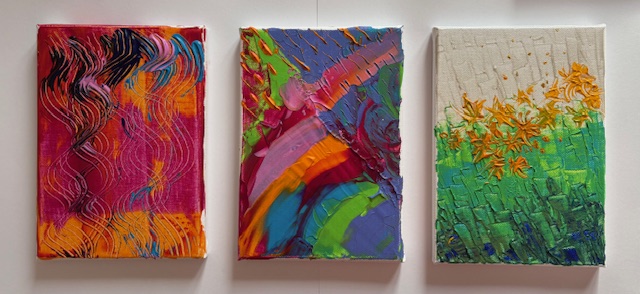
‘It was really interesting to experiment like this, to play with paint and palette knives and see what happened. I think mine were really about joy always being there and breaking through in different ways.’
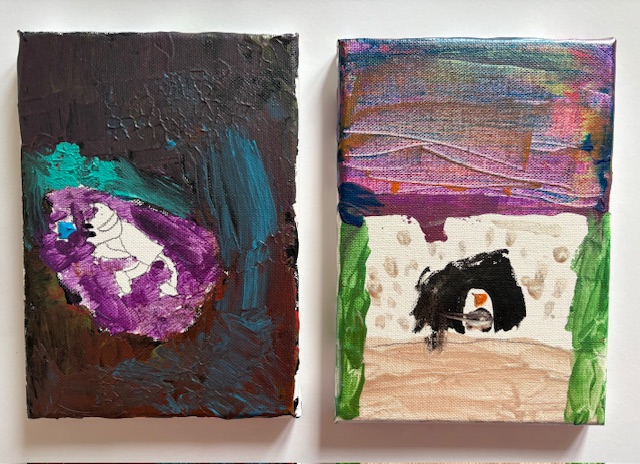
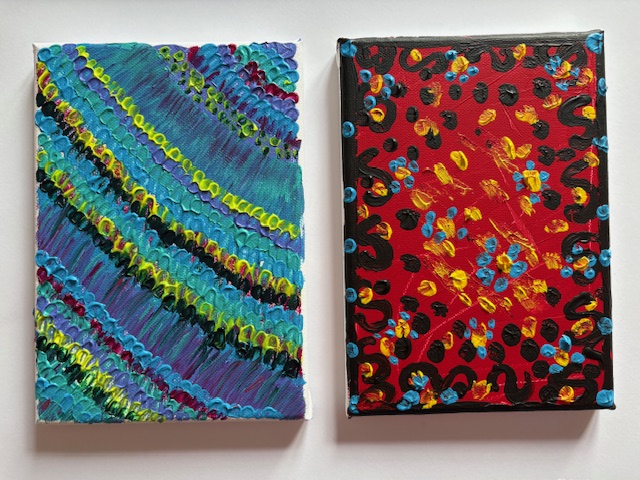
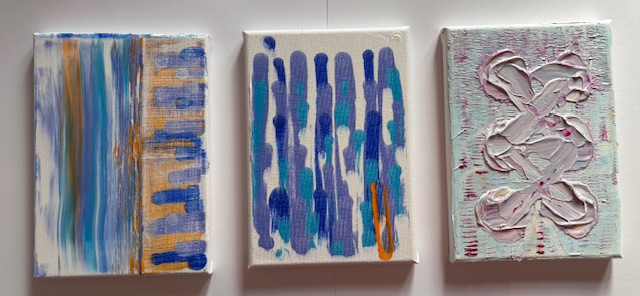
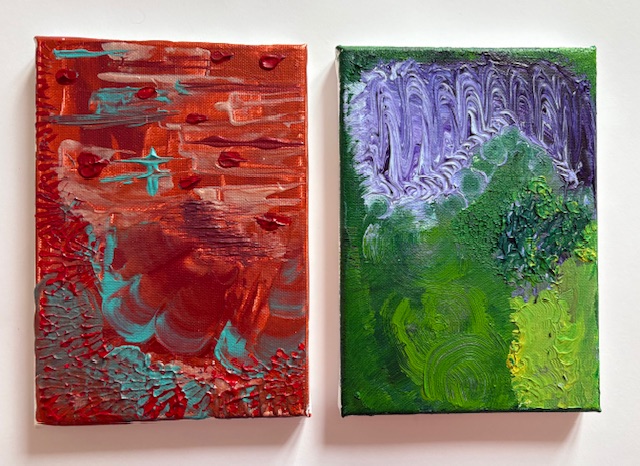
‘In my first painting I was inspired by the summer days and walks in the English countryside, which often feature in Jane’s novels. The second is a bonnet from the Austen period.’
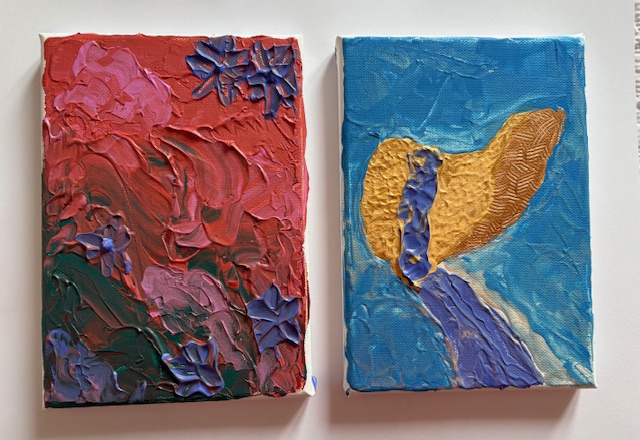
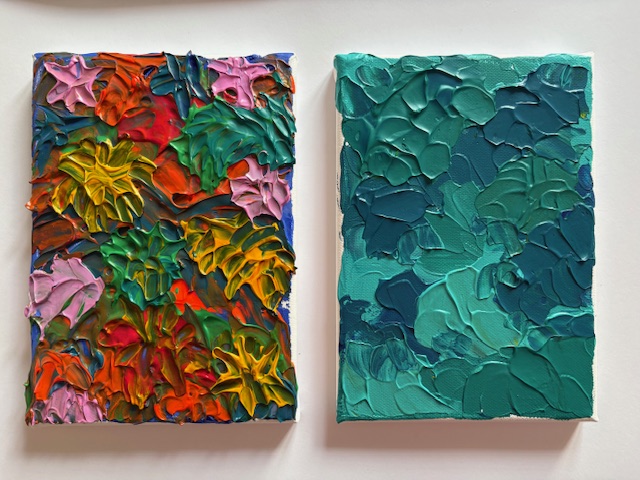
‘My art piece started as a butterfly and developed into an explosion of flowers. I imagine it is somewhere in the jungle!’
‘Shrine to the Worm: my original plan was just to spread some blue around. However, I found myself captivated by the free-standing worm structure I inadvertently created. I painted around it in the hope that the worm would remain standing indefinitely. By the time you read this, it probably fell over.
Shrek after a 12-hour Standoff with Police: it’s what it says on the tin really.’
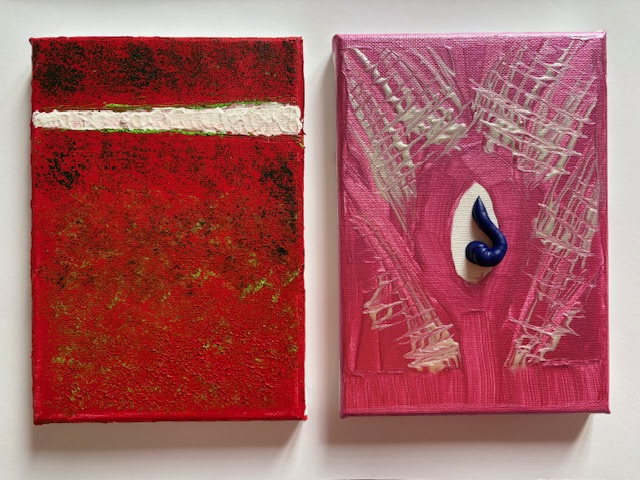
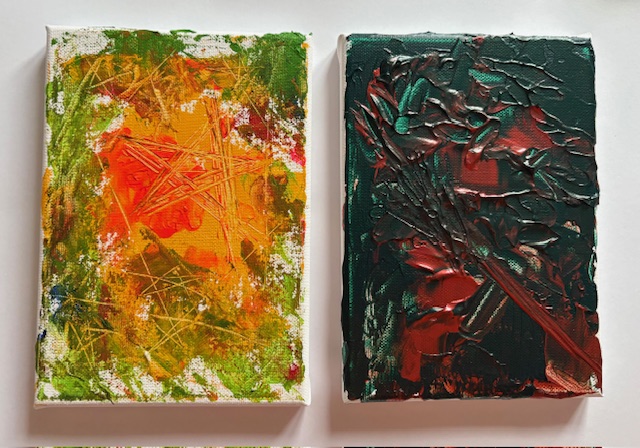
‘My first piece played with this very chaotic canvas, covered in stars.
My second piece was about the passage of time getting older through the motif of rusting copper.’
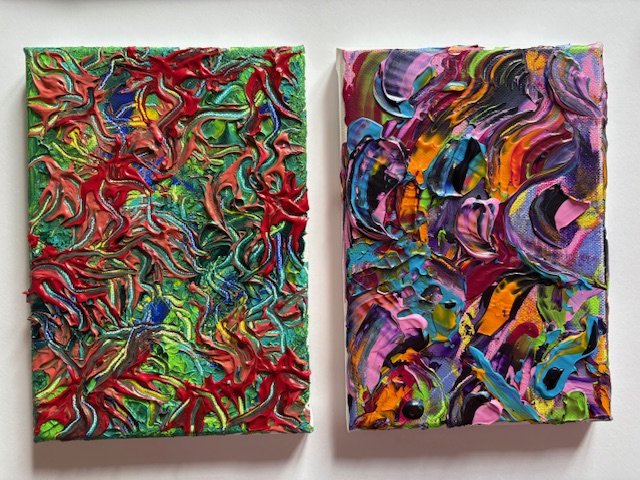
‘Beyond the Boundary: a celebration of the vibrancy that lives at the limit of every grey area.
Desire Becomes Discovery: synapses firing, all at once in a sea of verdant recollection.’
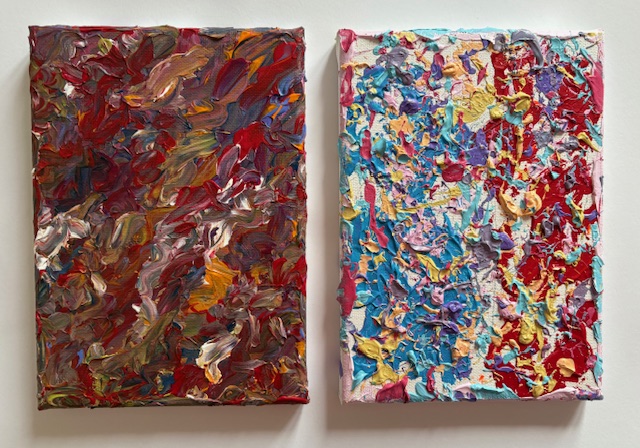
‘Two figures in the back of the painting. Red representing pride which is taller and blockier in stature, while blue is prejudice.
The colours flicked onto them are their thoughts and feelings as they slowly lose their original colours through sharing their connection.
The other is just a fun swirly one!’
‘Trees with a quiet place and life of sun’
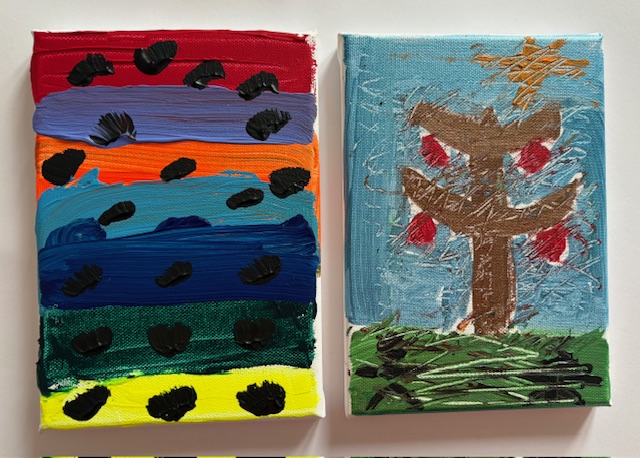
‘Ladybird life is the title of my painting. I felt my senses have woken up. It was lovely to do something that I wouldn’t usually do.’ [Maya]
‘I made my galaxy with an expression of space and my sunset over the sea is Languedoc. If I’m sad these are the places that I go to in my mind.’
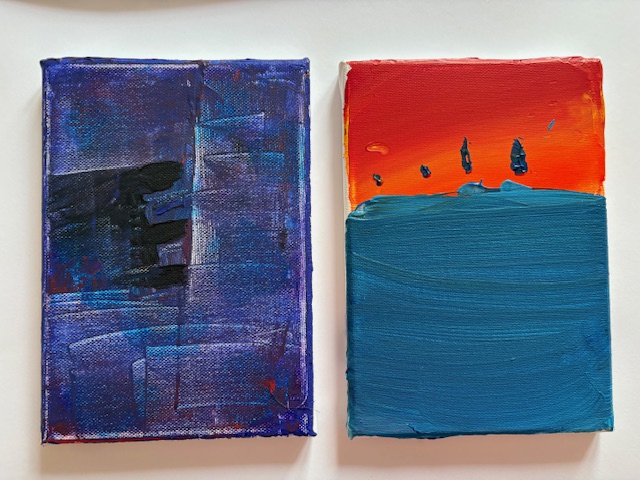
‘Today’s art for me relates to a transformative book in my life – ‘I’m OK, You’re OK’ by Thomas Anthony Harris. The book explores the concept of ‘transactional analysis’ – in short, how we are able to categorise our interactions and self-perception into our ‘child’ – our sillier, freed, authentic but possibly most vulnerable self; our ‘adult’ – perhaps the rational, controlled and functional side, perhaps our life when it is in balance; and finally our ‘parent’ – the typically critical, negative but also importantly safe, maybe the side which tells us or those around us when enough is enough.
It goes into details about how people’s interactions within each ‘area’ may cause harmony, or conflict, between urselves and others. It’s a beautiful book and makes our thoughts well organised, meaning it is applicable to every scenario. Highly recommend for those who struggle with spirals, and not quite knowing who you are.’
[this person didn’t write their name so not sure which pieces it relates to]
Your Stories is supported by Southampton Forward, National Lottery Heritage Fund and Foyle Foundation as part of Jane Austen 250.
Supported by:


