
Work made during the Cartoons workshop on Saturday 13th September 2025
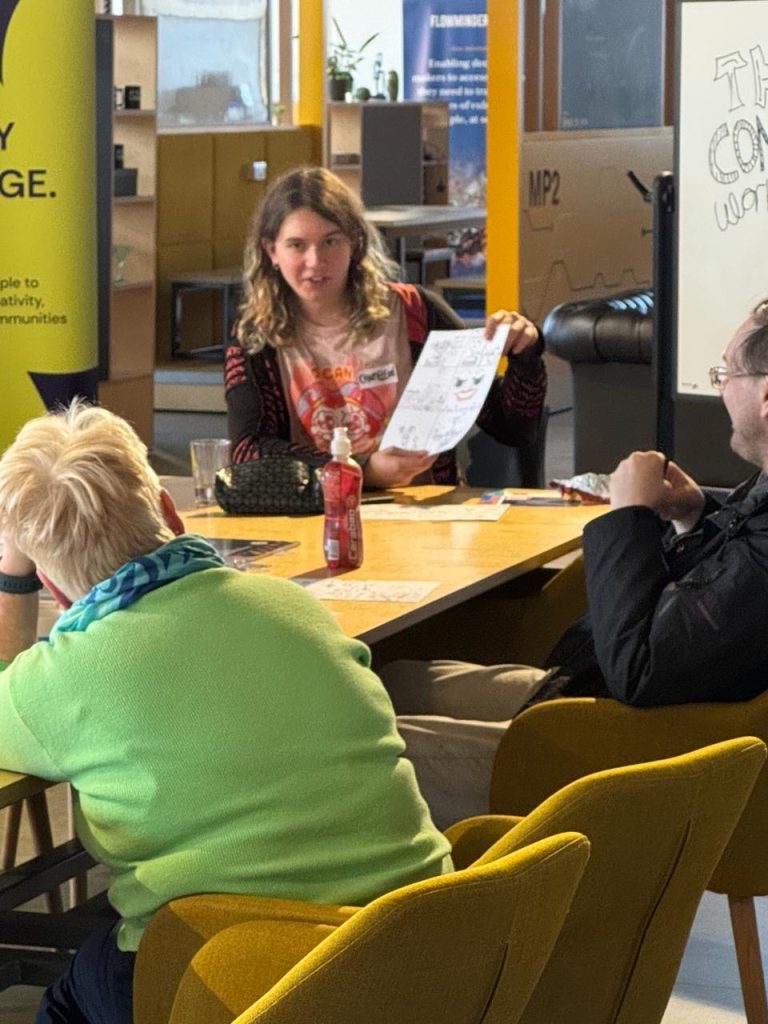
Six people aged from 18 to in their 50s gathered at Eagle Lab in Southampton for a Cartoons workshop inspired by Jane Austen. Jane’s stories often pivot on a few key moments, where characters are introduced, the narrative moves on or resolution is achieved. Cartoons do this in a very simple and effective way, and they are a great creative approach to working out how to tell a story in just a few central scenes.
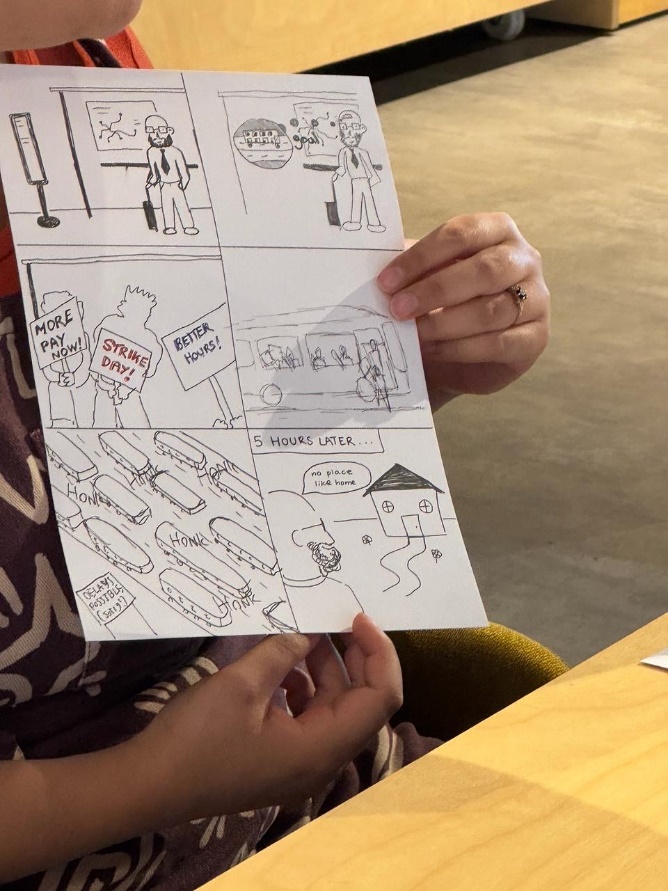
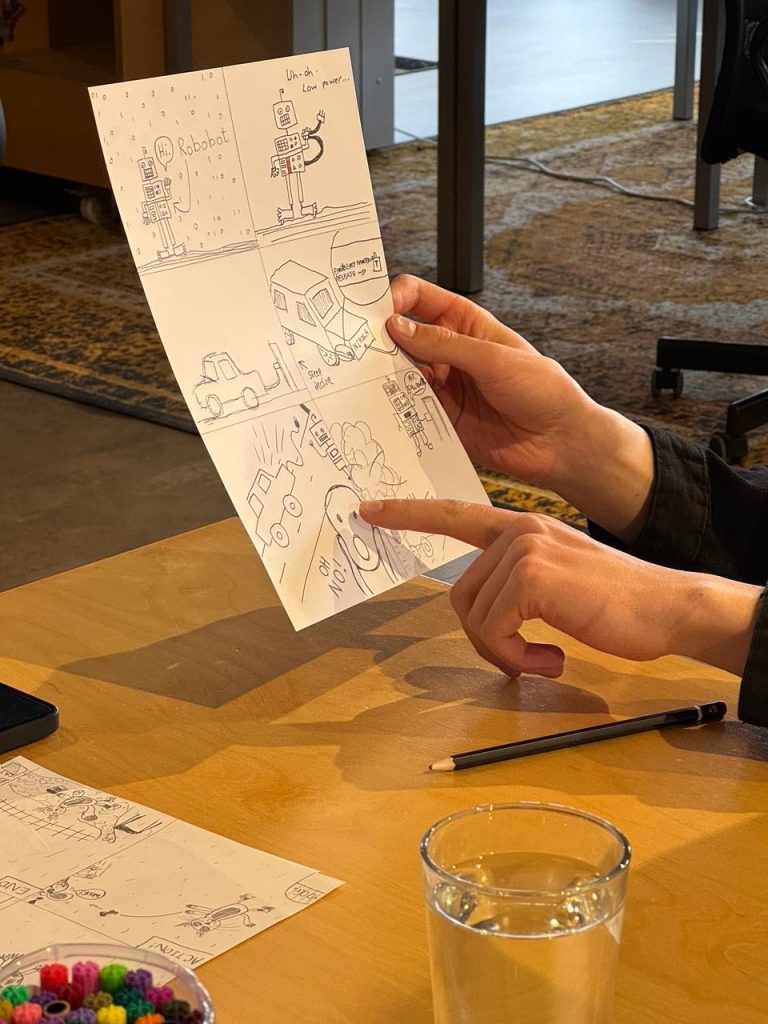
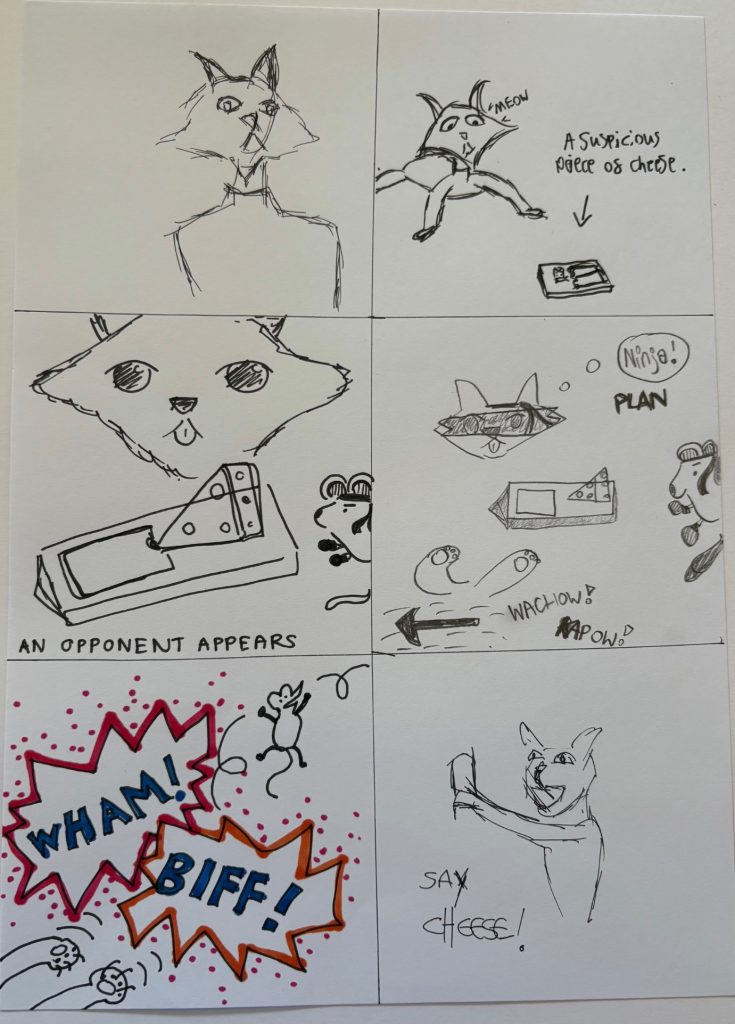
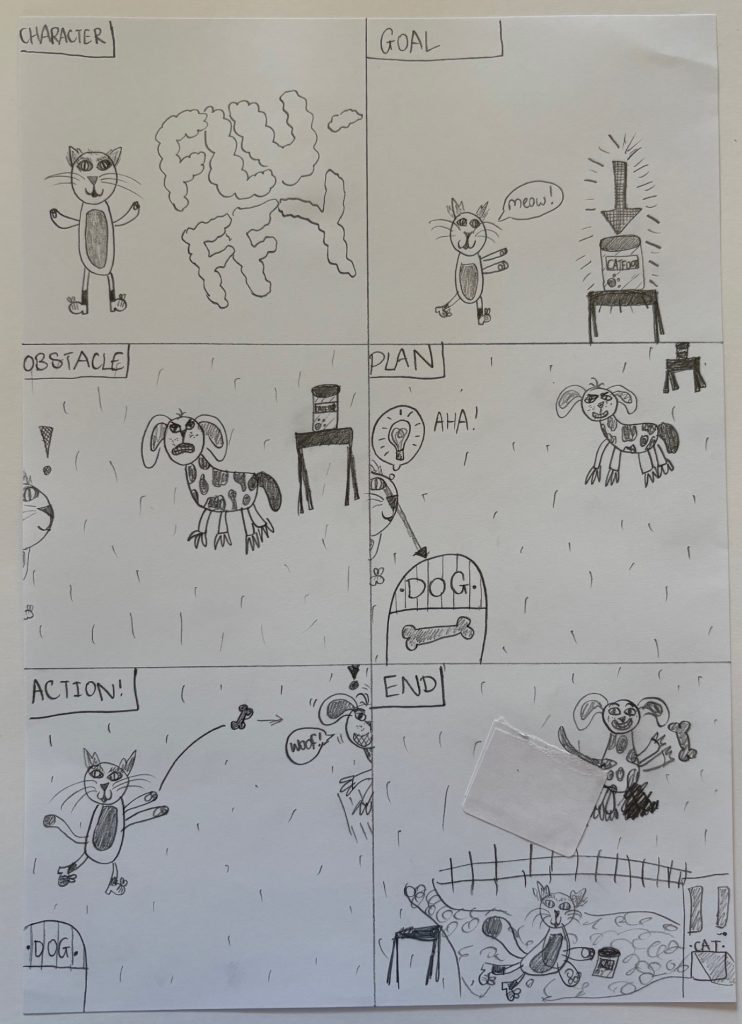
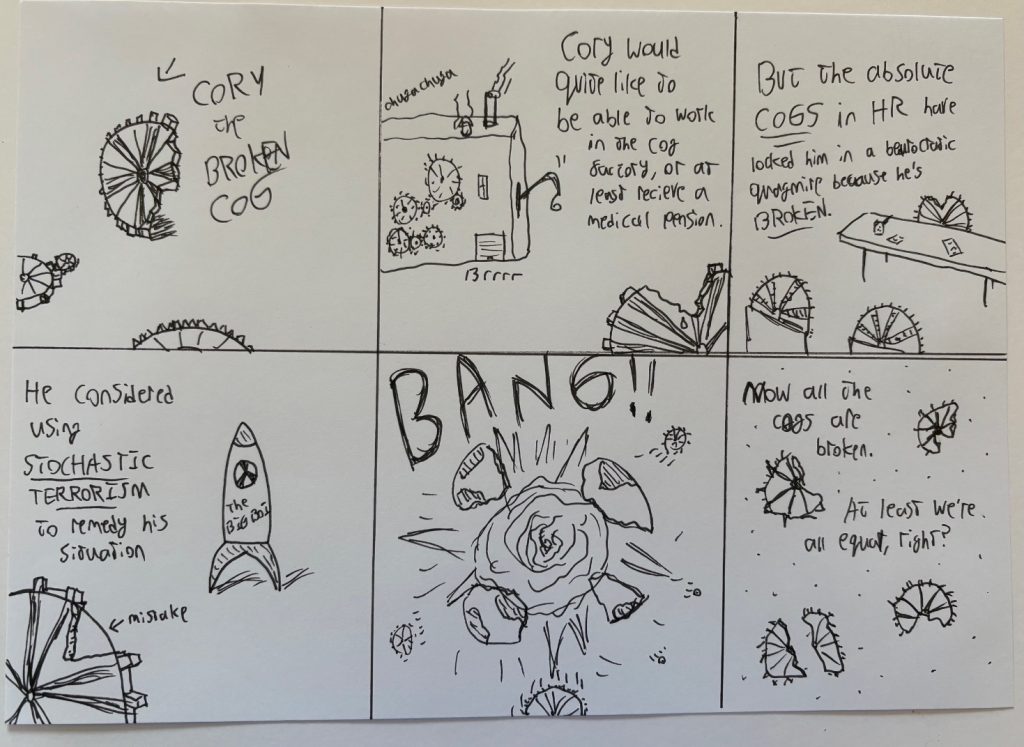
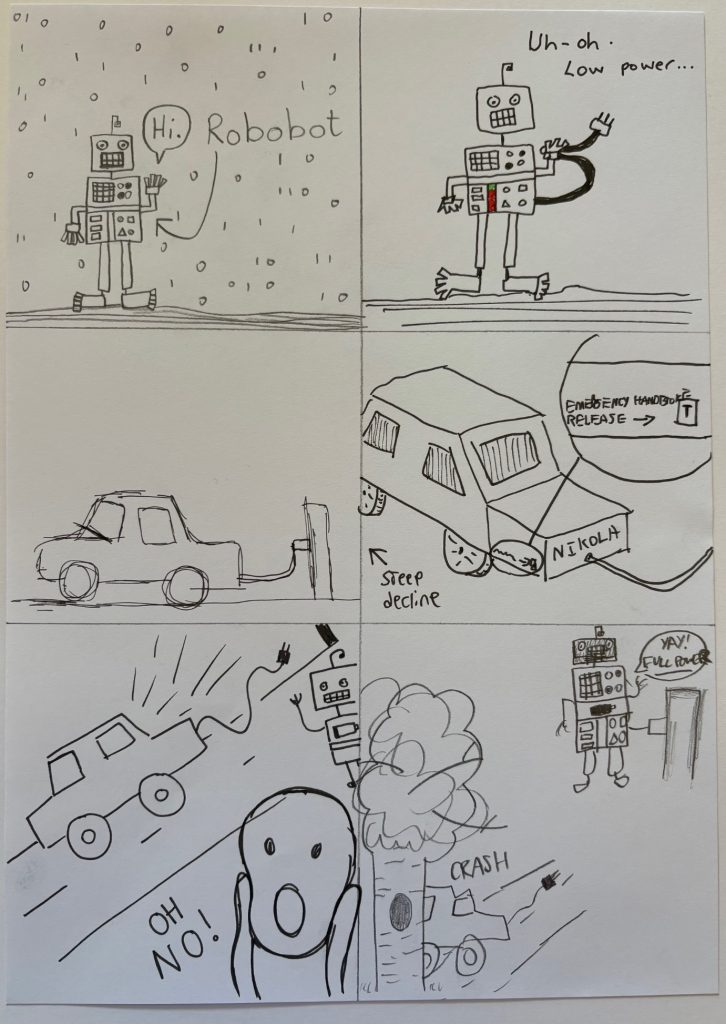
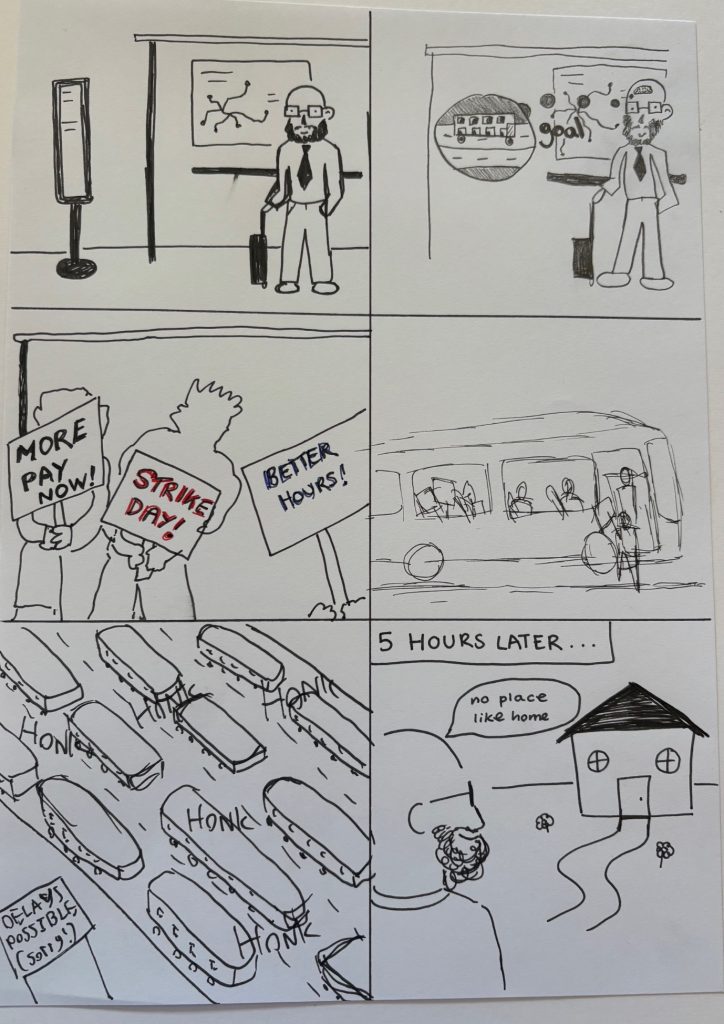
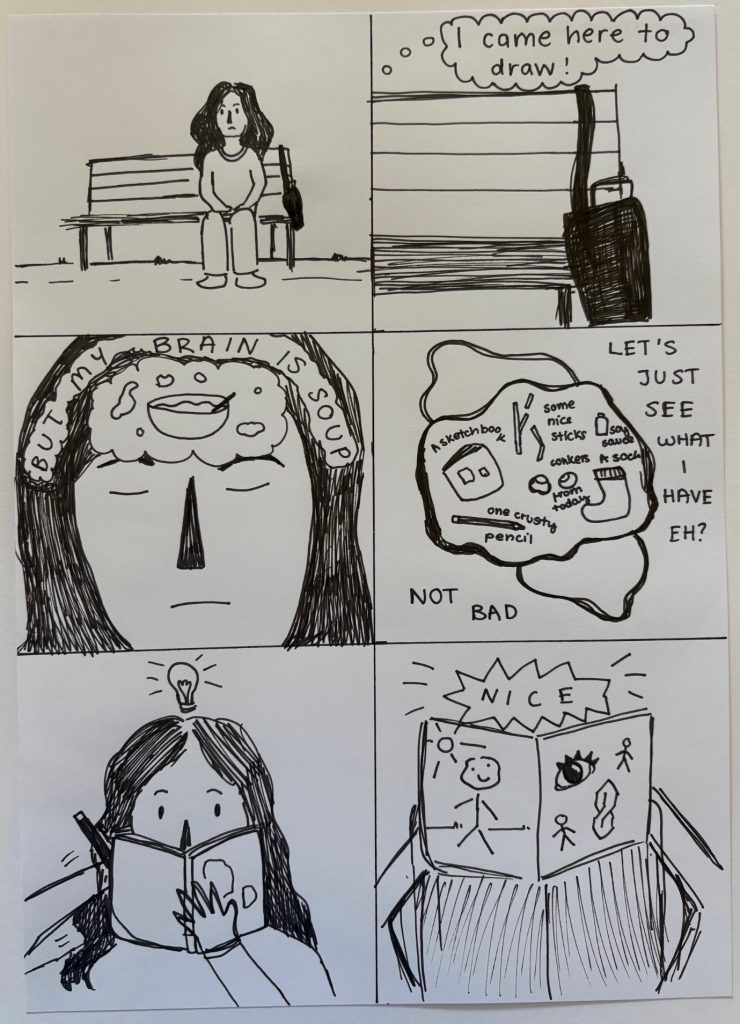
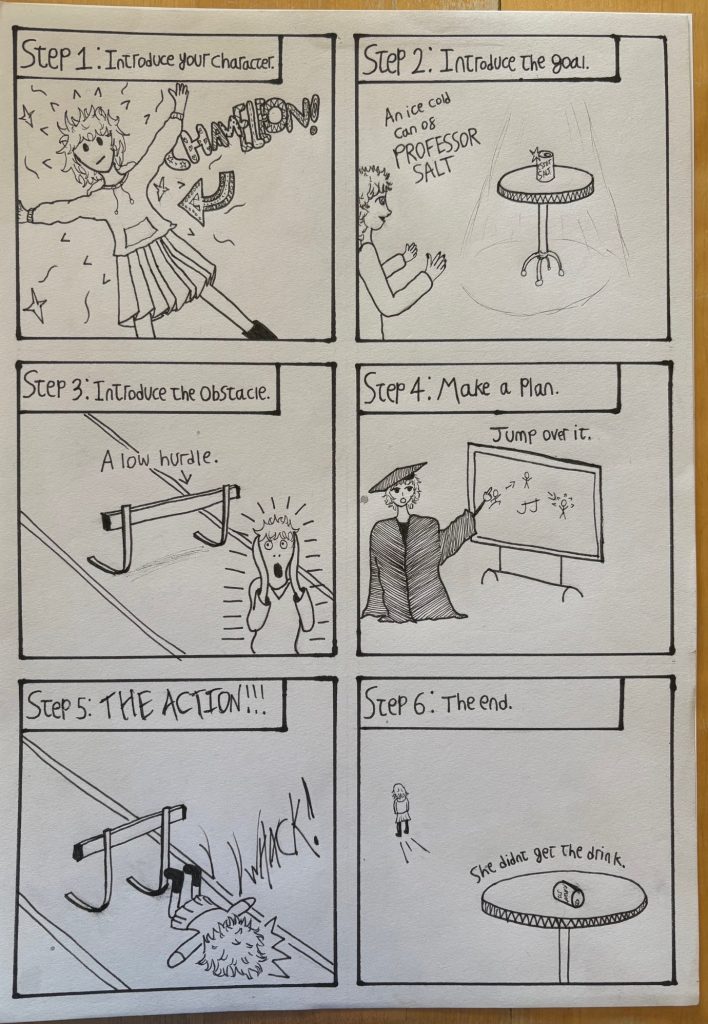
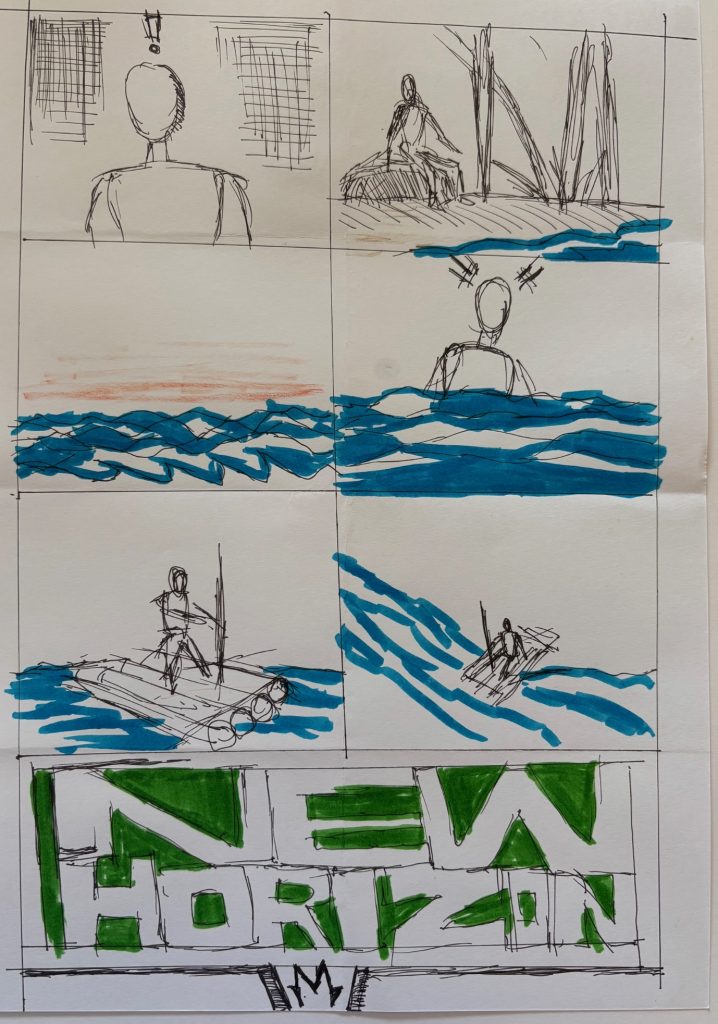
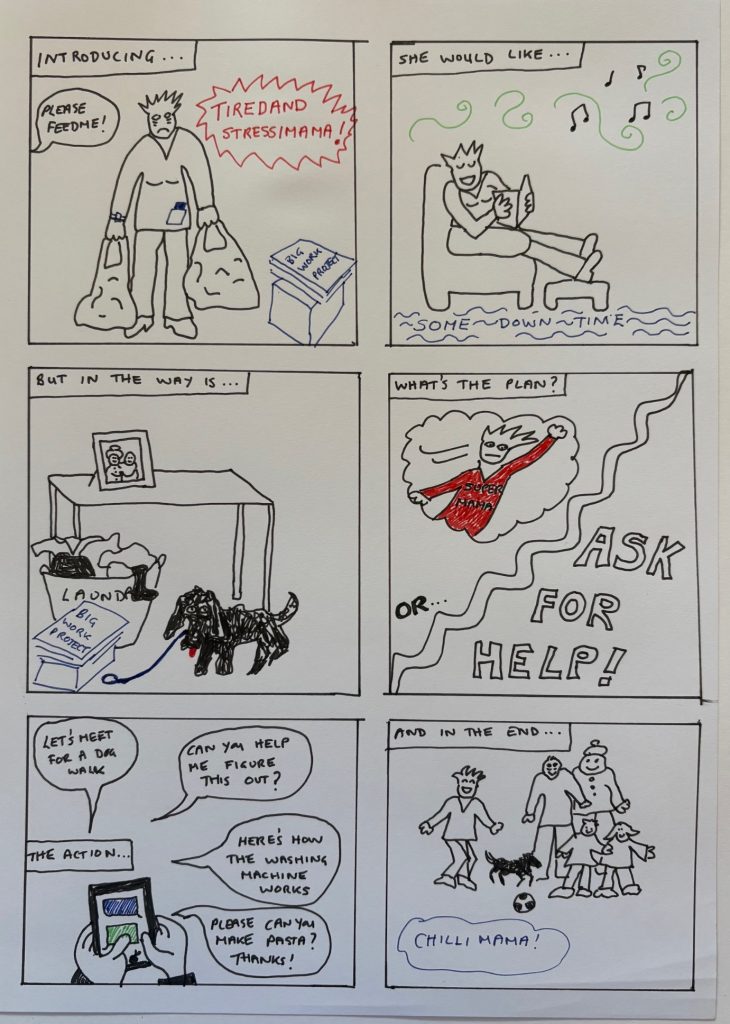
Participants learned from the young leader how to tell a story through a 6-panel cartoon. They were given just five minutes each to draw an initial panel introducing the character of their story, then a second panel outlining that character’s goal. Panel 3 introduced some kind of challenge or barrier, and panel 4 was the character outlining some kind of plan. Panel 5 was the plan being enacted (perhaps successfully, perhaps unsuccessfully), and the last panel showed the end result.
Everyone was encouraged to draw in pen if possible, to help them avoid overthinking what they were doing – mistakes were fine, just get the story down. Participants really learned from each other as work was shared, including seeing some people using very different viewpoints to add drama (focusing in or zooming out), using colour and using sketchier styles. They also noted the effect of using words or not, and how challenging but effective it could be to avoid words within the cartoon altogether.
Having made one 6-panel cartoon each on their own story, participants then collaborated to make 5 more cartoons together, each drawing a panel and then passing it on to the person next to them. Decisions were made about mirroring styles or not, and what to do with each story next. It was surprising and a lot of fun to see where each story went, which was often not what the initial creator had anticipated.
There are no additional words to go with these stories, as they are themselves stories.
Your Stories is supported by Southampton Forward, National Lottery Heritage Fund and Foyle Foundation as part of Jane Austen 250.
Supported by:


